A first-timer's guide to Mount Koya (Koyasan): where to eat, stay & explore
A practical guide to Mount Koya (Koyasan) for first-time visitors — how to get there, where to eat, where to stay, and what to explore.
Introduction
Mount Koya, known in Japanese as Koyasan, is a mountain plateau roughly 900 meters above sea level in the Wakayama Prefecture of the Kii Peninsula. Founded in the early ninth century by the monk Kukai, who established the Kongobuji temple complex here, the entire mountain settlement is regarded as the living center of Shingon Buddhism and draws pilgrims, scholars, and curious travelers alike.
What makes Koyasan unusual among Japan's sacred sites is that it functions as an inhabited monastic town rather than a single monument. Roughly 50 temple lodgings operate alongside active religious institutions, a working cemetery of extraordinary scale, and forested paths that feel genuinely removed from the modern world. The effect is less that of a tourist attraction and more that of a place that has continued on its own terms for over a thousand years.
Visitors who stay overnight rather than arriving on a day trip tend to describe the experience differently from those who do not. The quiet that descends after the last tour buses have gone, the sound of monks at morning practice, and the lantern-lit paths through ancient cedar groves at dusk are elements that cannot be replicated on a rushed itinerary.
Getting there and getting around
The most common approach from Osaka is via the Nankai Koya Line from Namba Station, a journey that takes roughly two hours to Gokurakubashi Station at the mountain's base. From there, a cable car ascends to Koyasan Station, after which local buses connect to the main areas of the plateau. Travelers from Kyoto or Nara will typically route through Osaka. There is no direct shinkansen access, and the mountain road is navigable by car, though parking and narrow lanes make the train-and-cable-car combination the more practical choice for most visitors. The Nankai Koya Line is covered in part by certain Japan Rail Pass variants, so it is worth confirming pass compatibility before departure.
Koyasan itself is compact enough that many of the main sites — the temple precincts, the main market street of Monzenmachi, and the western Danjo Garan complex — are reachable on foot from central lodgings. The plateau stretches roughly four kilometers end to end, and the eastern Okunoin cemetery path is a pleasant walk in its own right. Local buses run a single main route connecting the key stops, and day passes are available for those who prefer not to walk every segment. Cycling is possible and rentals are available, though the terrain includes gentle grades that suit leisurely riders better than those expecting flat ground. Taxis exist but are limited in number.
Bon On Shya Cafe — Kōyasan Station (Kōya Cable Line) (20 min walk)

Bon On Shya Cafe is a cozy mountain café tucked inside Kōyasan's ancient temple town.
Warm, rustic interior offering a relaxed refuge inside a sacred mountain town. Freshly brewed coffee and handmade sweets served in an intimate setting. Situated in the heart of Kōyasan, steps from ancient temple grounds. A beloved rest stop for pilgrims and tourists alike on the mountain circuit.
A welcoming UNESCO-site café that is the perfect rest stop between Kōyasan's iconic temples.
Ekoin Temple (Shukubo) — Koyasan Station (Nankai Koya Line cable car terminus) (10 min walk)
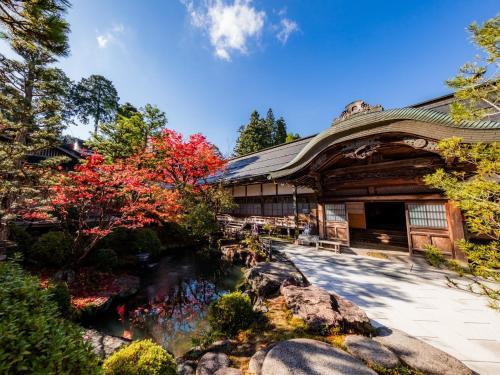
Ekoin is a traditional Buddhist temple lodge nestled deep in sacred Mount Koya.
Guests participate in the morning goma fire ritual led by resident monks at dawn. Traditional shojin ryori Buddhist vegetarian multi-course meals served in-room. Serene garden with stone lanterns creates an authentic mountain-monastery atmosphere. Prime location steps from Okunoin, Koyasan's most sacred mausoleum site. English-speaking staff and guided night lantern tours of Okunoin cemetery available.
English-guided night lantern tours of Okunoin cemetery make this utterly unmissable.
Okunoin — Gokurakubashi Station (Nankai Koya Line, then cable car + bus to Koyasan)
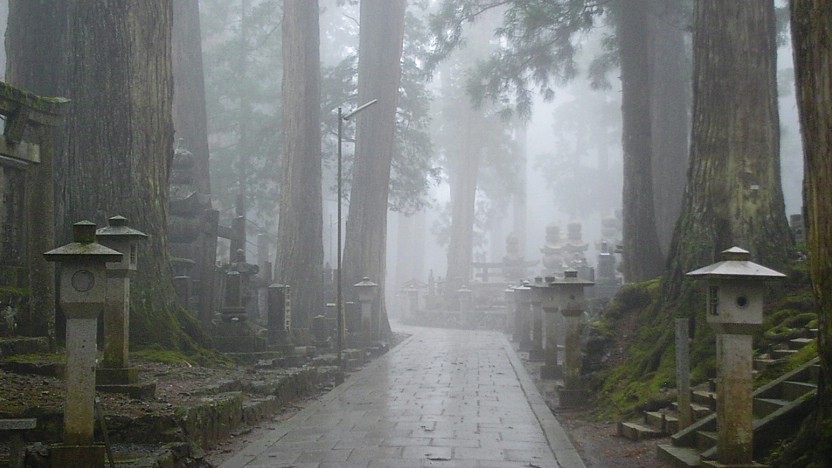
Okunoin is a vast sacred mausoleum complex nestled in the ancient cedar forests of Mount Koya.
A 2 km stone-lantern-lined path winds through towering ancient cedars past over 200,000 moss-covered memorial tombs. Houses the mausoleum of Kobo Daishi (Kukai), revered founder of Shingon Buddhism and still considered spiritually present. Open after dark, when thousands of lanterns cast an otherworldly glow across the forest floor. Tombstones of feudal lords, samurai, emperors, and even modern corporations create a sweeping timeline of Japanese history. Part of the UNESCO World Heritage 'Sacred Sites and Pilgrimage Routes in the Kii Mountain Range'.
The lantern-glowing forest at dusk creates a deeply atmospheric experience that stays with you long after.
When to visit and where to stay
Spring and autumn are widely considered the most comfortable seasons for a visit. In late April and May, temperatures on the plateau are mild and the mountain foliage is fresh; in October and November, the cedar and maple forest around Okunoin shifts into deep amber and red tones that make the cemetery paths particularly atmospheric. Summer brings cooler temperatures than the lowland cities, which can be a draw in itself, but also heavier mist and occasional rain. Winter transforms Koyasan into a snow-covered landscape that appeals to visitors seeking genuine solitude, though some accommodation and facilities reduce their hours and a few close entirely during the coldest months. The shoulder periods of early October and mid-May tend to offer a good balance of pleasant weather and manageable visitor numbers.
Accommodation on Koyasan is concentrated around two general areas of the plateau. The central district near Monzenmachi, the main commercial street, offers the most convenient access to shops, the central market area, and the bus route, making it a practical base for those who want to minimize walking between meals and sights. Temple lodgings, called shukubo, are distributed across the plateau, and those situated closer to the Okunoin entrance on the eastern side allow guests to reach the cemetery path in the early morning before day visitors arrive — an experience that differs markedly from the busier afternoon hours. Lodgings nearer the Danjo Garan complex on the western side suit travelers whose primary interest is in the ritual and architectural landscape of the original temple precincts. In all cases, the mountain's small scale means no area is genuinely inconvenient; the choice is more about which atmosphere a traveler wants closest at hand.